Sunday, April 24, 2016

World Malaria Day 25th April


WHO estimated that in 2015 nearly 3.2 billion people or about half the world’s population were at risk of malaria across 97 countries and territories.  Though the majority of these cases and deaths occur in sub-Saharan Africa  those in Asia, Latin America and even the Middle East are at risk.

It is estimated that there were 214 million cases of malaria and 438,000 deaths.  It’s not all bad news though as since 2001 it is estimated that 6.2 million lives have been saved.  Furthermore between 2000 and 2015, malaria mortality rates among populations at risk has decreased by 60% with the incidence among populations at risk falling by 37% globally. 

So just what is Malaria?  It is a a preventable and curable disease caused by parasites spread through bites from infected female mosquitoes.  Those most vulnerable are young children, pregnant women and non-immune travellers from malaria free areas.


Symptoms 
Initial symptoms include fever, headache chills and vomiting which can make it hard to diagnose and recognise as malaria especially given symptoms usually occur 10-15 days after being bitten  In severe cases multi organ involvement is frequent.  For those who live in malaria endemic areas they may have developed partial immunity allowing asymptomatic infections to occur 

Treatment
As with most diseases, early diagnosis and treatment is the aim to reducing further spread and mortality.  Unfortunately like TB, resistance to antimalarials is one of the challenges to effective treatment. Fortunately at this time anti-malarial drug resistance is geographically isolated in the Greater Mekong Subregion (Cambodia, Laos, Myanmar, Thailand and Vietnam.  As such additional support is being provided to strengthen the prevention, diagnosis and treatment of malaria in this region. 

Source: WHO World Malaria Report 2015
Prevention
  • WHO recommends the following vector controls: 
    1. Insecticide Treated Mosquito Nets 
    2. Indoor Residual Spraying 
  • Use of antimalarial medicines for travellers, pregnant women and children living in malaria prone areas 

Clinical trials of the most malaria vaccine (RTS, S/AS01) is underway and shows promising results. The vaccine was developed as a partnership between GSK (GlaxoSmithKline Biologicals) and MVI (PATH Malaria Vaccine Initiative) with support of the Bill and Melinda Gates Foundation as well as network of African research centre.
RTS, S/AS01 works against the most deadly form of malaria which also happens to be the most prevalent in Africa.  It is being used alongside other more established preventative techniques given that additional trials and registration/testing is still underway. 

Research and development of other malaria vaccines is also underway though are not as far advanced nor show as much promise as RTS, S/AS01. 

It is noted that there are no licensed vaccines against malaria or any other human parasite. 

The World Health Assembly adopted an ambitious but achievable strategy in 2015 by 2030

  • Reducing by at least 90% the rate of new malaria cases
  • Reducing the death rates of malaria by 90% 
  • Elimination of malaria in at least 35 countries
  • Ensuring that malaria-free countries remain that way 

Unfortunately it is estimated that to reach these goals the spending for malaria treatment and prevention needs to triple over the next 15 years to US$8.7 billion by 2030. 

One can donate to help end Malaria: The Global Fund

Disclaimer: The opinions expressed within this article are the personal opinions of the author. The facts and opinions appearing in the article do not reflect the views of AarogyaSeva and AarogyaSeva does not assume any responsibility or liability for the same.

To get in touch with the author or to join our team write to us at – Volunteer@aarogyaseva.org

Thursday, April 21, 2016

World Immunisation Week 24th-30 April


“ No child should be denied the right to immunization for unfair reasons, including economic or social causes. All barriers must be overcome.”  Dr Margaret Chan, WHO Director-General


It is estimated that 2-3 million deaths are avoided from diphtheria, tetanus, pertussis and measles due to immunisation.   Unfortunately there is an estimated 18.7 million infants worldwide who are still missing out on basic vaccinations. More than 60% of these children live in 10 countries including India.

Illness, disability and death from cervical cancer, diphtheria, hepatitis B, measles, mumps, polio, rubella and rotavirus diarrhoea are among the diseases immunisation can prevent. 

World Immunisation Week is celebrated annually to raise public awareness of how it saves lives and encourage increase vaccination rates for both adults and their children. 

This is the second year that the theme has been to “Close the Immunisation Gap”.

Global immunisation coverage 2014 


We are still lagging on diseases that can be easily prevented and more needs to be done now to prevent avoidable illness and deaths. 

Contrary to common belief vaccinations are required not just by children but we also need to remember that as adults we also need to ensure our vaccinations are put to date.  For instance before my nephew was born my family and I all had to make sure we had our shots of pertussis or whooping cough up to date as babies under 1 month are unfortunately very vulnerable and unable to be vaccinated at birth.   I’ve seen footage of a child with whopping cough and struggling to breathe and it is very distressing to hear and watch. 

These are WHO’s 6 Goals of the Global Vaccine Action Plan 
  1. Immunisation against Diphtheria, Tetanus and Pertussis
  2. Measles mortality Reduction 
  3. Rubella elimination 
  4. Maternal and neonatal tetanus elimination
  5. Polio Eradication 
  6. Use of new or under-utilised vaccines 

Here are some ways in which you can help: 
  • Make sure that you and your family immunisations are up to date
  • If you are anyone you know is pregnant or trying to be make sure they have are vaccinated against rubella and tetanus 
  • Share this blog and other Immunisation Week articles and news with your friends and family 
  • Donate to organisations that are working to closing the immunisation gap such as World Vision, or UNICEF
When our clinic opens we encourage everyone to come down and get a health check including assessing if your immunisations are up to date. 


Disclaimer: The opinions expressed within this article are the personal opinions of the author. The facts and opinions appearing in the article do not reflect the views of AarogyaSeva and AarogyaSeva does not assume any responsibility or liability for the same.


To get in touch with the author or to join our team write to us at – Volunteer@aarogyaseva.org


Tuesday, April 5, 2016

World Health Day April 7th


April 7th marks World Health Day.  This year WHO has chosen to focus on the fight against Diabetes.  I’m sure everyone of us knows some one who has diabetes.  

Diabetes is a complex multi organ disease which is more than just your body not being able to process/use insulin normally leading to increased risk of heart attacks, kidney failure, blindness, amputation and stroke.

In 2012 it was a direct cause of 1.5 million deaths with WHO predicting that diabetes will be the 7th leading cause of death by 2030.


Why are we focused on Diabetes this World Health Day? 

  1. The diabetes epidemic is rapidly increasing in many countries, with the documented increase most dramatic in low- and middle-income countries.
  2. A large proportion of diabetes cases are preventable. Simple lifestyle measures have been shown to be effective in preventing or delaying the onset of type 2 diabetes. Maintaining normal body weight, engaging in regular physical activity, and eating a healthy diet can reduce the risk of diabetes.
  3. Diabetes is treatable. Diabetes can be controlled and managed to prevent complications. Increasing access to diagnosis, self-management education and affordable treatment are vital components of the response.
  4. Efforts to prevent and treat diabetes will be important to achieve the global Sustainable Development Goal 3 target of reducing premature mortality from noncommunicable diseases (NCDs) by one-third by 2030. Many sectors of society have a role to play, including governments, employers, educators, manufacturers, civil society, private sector, the media and individuals themselves.


Goals of World Health Day 2016

  1. Increase awareness about the rise in diabetes, and its staggering burden and consequences, in particular in low-and middle-income countries;
  2. Trigger a set of specific, effective and affordable actions to tackle diabetes. These will include steps to prevent diabetes and diagnose, treat and care for people with diabetes; and
  3. Launch the first Global report on diabetes, which will describe the burden and consequences of diabetes and advocate for stronger health systems to ensure improved surveillance, enhanced prevention, and more effective management of diabetes
Take the quiz on your knowledge of diabetes here:  Take Diabetes Quiz here


When our clinic opens we encourage everyone to come down and get a health check including assessing if you have diabetes. 


Disclaimer: The opinions expressed within this article are the personal opinions of the author. The facts and opinions appearing in the article do not reflect the views of AarogyaSeva and AarogyaSeva does not assume any responsibility or liability for the same.


To get in touch with the author or to join our team write to us at – Volunteer@aarogyaseva.org


Friday, April 1, 2016

What's Toby Up to These Days?


Remember Toby Lamp who volunteered with us last year? 


Toby is a Registered Nurse from Indiana USA with over 4 years experience as ER Trauma Tech, Medical Support Assistant and LPN.  He has a big smile and lots of energy.

After spending a month in India followed by 2 months in Nepal post the Earthquakes he was inspired to cycle across America to raise awareness and funds for AarogyaSeva, Nepal and Chennai.   It was a massively inspiring effort and we thank him for his contribution.

So what's Toby up to these days? 

He's back in US working as an ER/ICU nurse for Dupont Hospital.  In his spare time he is keen to raise awareness on health issues and is looking to run for Congress.  Toby is also who connected us to our current crowd funding campaign on female hygiene kits.  Thanks for bringing this to our attention! 

To find out more on what Toby is up to: Toby Lamp 
To donate to our crowdfunding campaign: Donate Here


Disclaimer: The opinions expressed within this article are the personal opinions of the author. The facts and opinions appearing in the article do not reflect the views of AarogyaSeva and AarogyaSeva does not assume any responsibility or liability for the same.


To get in touch with the author or to join our team write to us at – Volunteer@aarogyaseva.org


Tuesday, March 22, 2016

World Tuberculous Day 24th March


Did you know Tuberculous (TB) ranks alongside HIV as a leading killer worldwide? 

I noticed it was World Tuberculous Day this Thursday and did a little research on it and was surprised and shocked by the findings particularly as this is a completely preventable and curable disease.

Every day over 4,000 people are dying from TB which is horrendously unacceptable especially when it is a curable disease.   This includes 383 children a day. It is among top 5 causes of deaths for women between 15-44.

According to UN Global Tuberculous Report the worldwide incidence has fallen 1.5% per year since 2000 for a total reduction of 18% and still in 2014 1.5 million people died from TB.  In 2014 9.6 million people fell ill with TB.

Photo Credit: World Health Organisation Global Tuberculous Report 2015
Yet it is not all bad news, we have made much progress with the death rate 47% lower than it was in 1990 and an estimated 43 million people saved between 2000-2015.

54% of the world’s TB cases occurred in China, India, Indonesia, Nigeria and Pakistan though there is a significant gap in diagnosis of TB.

So just what is TB?  

It is a bacterial infection which most often affects the lungs spread through the air.  Scarily about 1/3 of the world’s population has latent TB which means that they have the disease but are not yet ill and cannot transmit the disease.  However there is a 10% risk of falling ill with TB which increases for those with compromised immune systems such as those who are HIV positive, are malnourished or use tobacco.

Without treatment 45% of HIV negative people and nearly all HIV positive people with TB will die.   In 2013 86% of people who were treated fro TB were cured. 

Photo Credit: World Health Organisation

Why is there a TB day? 

World TB Day is the opportunity to raise awareness about the burden of TB and also provide an update on the status of TB prevention and treatment. 

Included in the UN Sustainable Development Goals is the aim to reduce TB incidence by 80% and TB deaths by 90% as well as the burden of the disease on the family by 2030.

Photo Credit: World Health Organisation 

Challenges of TB

  • symptoms of TB (cough with sputum and blood, chest pains, weakness, weight loss, ever and night sweats) can present mildly for several months which leads to treatment delays and continual spread of TB to the community
  • The length of treatment is from 6 months to up to 2 years which do not come without side effects leading to low adherence rates
  • Access to and cost of diagnosis and treatment hinders prevention and treatment
  • The emergence of not only Multi Drug Resistance TB (MDR-TB) but also Extensively drug-resistant TB (XDR-TB) where both first and second line medicines fail to work

What can we do? 

  • Enourage family and friends who have the symptoms of TB to see a Dr
  • Support those on TB treatment to continue the entire course
  • Donating to The Global Fund which will lead to additional research to improve access to and diagnosis and treatment of TB (as well as AIDS and Malaria). There is an estimated $1.3 Billion Dollar shortfall. Donate here
  • Ensure children in India and other countries at risk are vaccinated against TB
  • Listen to World TB Day 2016 To be continued 24 hour music event About World TB 2016 24 hour Music Event  Listen to the Event here
Photo Credit: WHO Global Tuberculous Report 2015

Disclaimer: The opinions expressed within this article are the personal opinions of the author. The facts and opinions appearing in the article do not reflect the views of AarogyaSeva and AarogyaSeva does not assume any responsibility or liability for the same.

To get in touch with the author or to join our team write to us at – Volunteer@aarogyaseva.org

Wednesday, March 16, 2016

International Day of Happiness 20th March


Foreign Minister Damcho Dorji of Bhutan addresses the general debate of the General Assembly’s seventieth session. UN Photo/Kim Haughton

"The pursuit of happiness is a fundamental human goal”  said the Foreign Minister Damcho Dorji of Bhutan when he addressed the general debate of the General Assembly’s seventieth session.

Here are 6 health reasons on why we should celebrate International World Happiness Day
  1. Happiness is good for your heart
  2. Happiness strengthens your immune 
  3. Happiness combats stress
  4. Happy people have fewer aches and pains
  5. Happiness combats disease and disability 
  6. Happiness lengthens our lives

For more information please visit: Six Ways Happiness is Good for Your Health 

The International Day of Happiness was proclaimed at General Assembly of the UN on 12 July 2012 as March 20th to recognise the relevance to happiness and well-being as universal goals and aspirations in the lives of human beings around the world and the importance of their recognition in public policy objectives.

It was first celebrated on 20 March 2013 and events now occur annually across the world. There have been much celebrity support around this day including Pharrell Williams with one of my favourite songs Happy.

https://www.youtube.com/watch?v=y6Sxv-sUYtM

Photo credit: www.ghanaflow.net 

I understand the day was chosen as it is the Spring/Autumn Equinox (depending on which hemisphere you live in) and is the day when the Sun crosses the celestial equator being the imaginary line in the sky above the Earth’s equator from south to north (vice versa in September) giving a nearly equal length of day and night.

Photo credit:www.wonderopolis.org  

The World Happiness Report 2016 Update has just been released and ranks 156 countries by their happiness levels. Denmark took out the top honour this year with the report noting that inequality strongly correlated with unhappiness. Populous nations such as China, India and the United States came in at 83, 118 and 13 respectively   Countries at the bottom of the list include Syria, Burundi and Afghanistan where there is much unrest and instability.  

For those interested to find out more it is available download free here: World Happiness Report 2016 Volume I 

As much as the study of happiness is expanding I do believe that the findings are just a glimpse into our lives and we all find happiness in our own way wherever we are.  

I leave you with 10 keys to happier living and invite you to join in taking some steps to happier and thus healthier living. 


To find out more please visit: Action for Happiness  

Disclaimer: The opinions expressed within this article are the personal opinions of the author. The facts and opinions appearing in the article do not reflect the views of AarogyaSeva and AarogyaSeva does not assume any responsibility or liability for the same.

To get in touch with the author or to join our team write to us at – Volunteer@aarogyaseva.org


Tuesday, March 8, 2016

International Women's Day Event


I hope everyone had a lovely day yesterday celebrating International Women's Day.

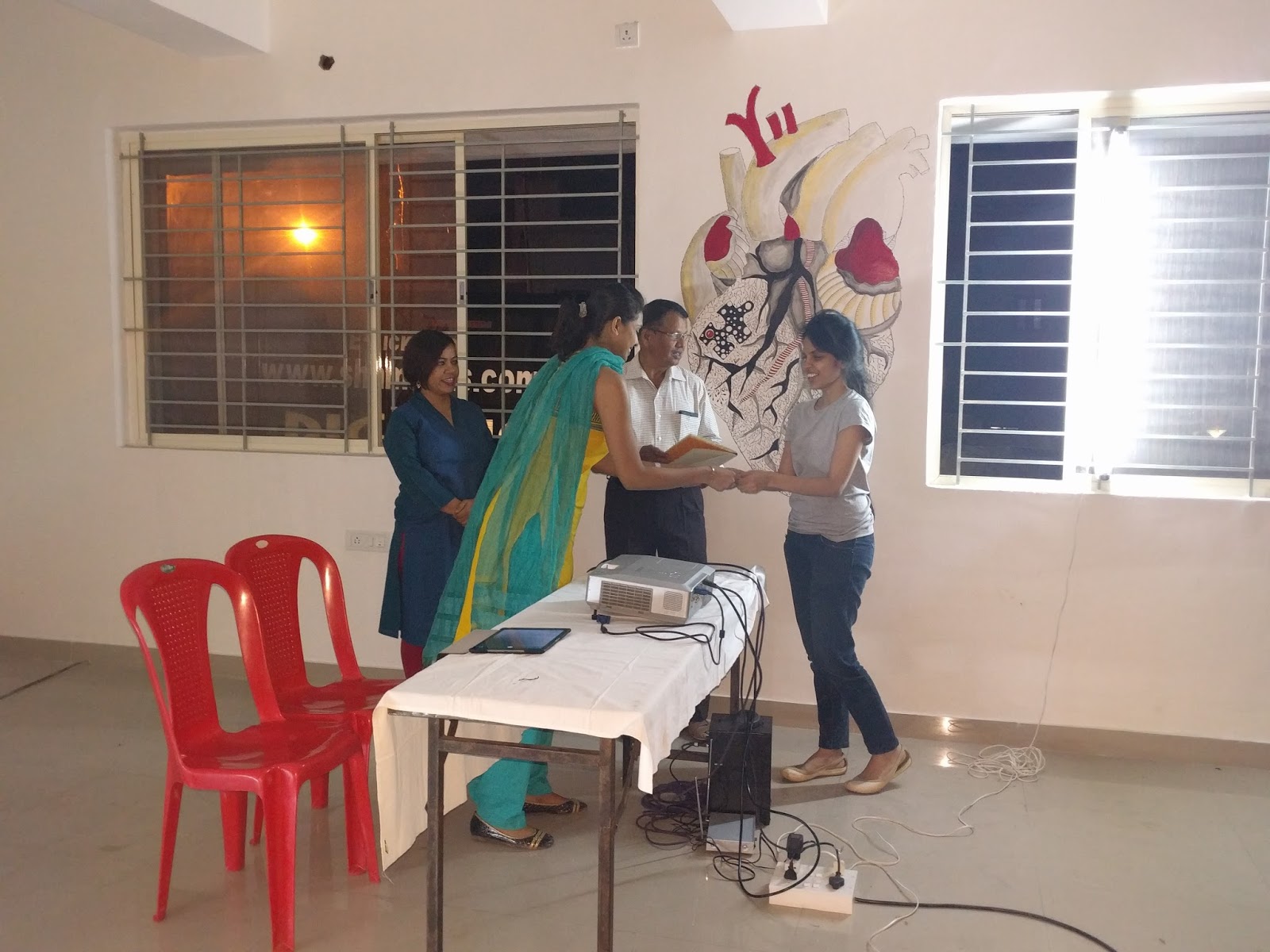
We at AarogyaSeva were lucky enough to have 6 artists come down yesterday to help decorate the walls of our soon to be open AarogyaSeva Karuna Clinic right near the Siddaoura Lalbagh Gate.

As Poornima, one of our artists said, it was bridging art and health via an Art to Heart Collective. Each artist had her own style and interpretation of the heart and it all come together in such beautiful way.

Two of the artists are still working on their pieces and photos will be posted of their completed works in the come week.

The kids in the neighbourhood come by throughout the day and really enjoyed watching the artists work. In fact some of the time they had too much fun just hanging out inside the clinic.

We were honoured to also run the trailer to Meryll a story about a young girl who lives in seclusion until when a series of events open a dark alley that bring back her worst nightmares to life.


We also ran an impromptu community session with thanks to Dr Karishma Kagod who spoke to women in the neighbourhood about giving themselves a voice and looking after themselves as they are the centre of the community and their families.  Dr Karishma is a plastic surgeon who is head of burns unit at Kolar Medical College.


Special thanks to Madhu from By the River who helped give thanks to our artists.  If you're after a storyteller please feel free to connect with her at:  By the River

I look forward for the clinic to be finished and for the community to be able to use the space.

You may have also noticed that we launched our campaign yesterday with the aim of providing 250 refugees with sanitary napkins for $20 per person.   Please support this worthwhile cause:  AarogyaSeva: Health, Dignity for female refugees

If you would like to volunteer or contact the author please drop us a line at Volunteer@aarogyaseva.org


Disclaimer: The opinions expressed within this article are the personal opinions of the author. The facts and opinions appearing in the article do not reflect the views of AarogyaSeva and AarogyaSeva does not assume any responsibility or liability for the same.