Showing posts with label Medical Yatra. Show all posts

Friday, March 17, 2017

Mercer Borris shares her experience


Health post: Medical Camps in Rural Villages


(as posted originally in https://interfacesofhealth.wordpress.com/2017/01/24/health-post-medical-camps-in-rural-villages/)

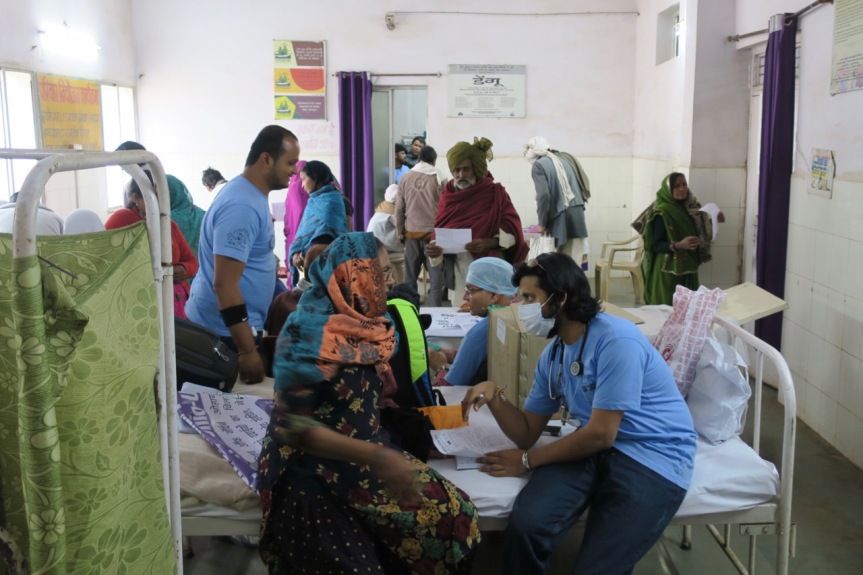
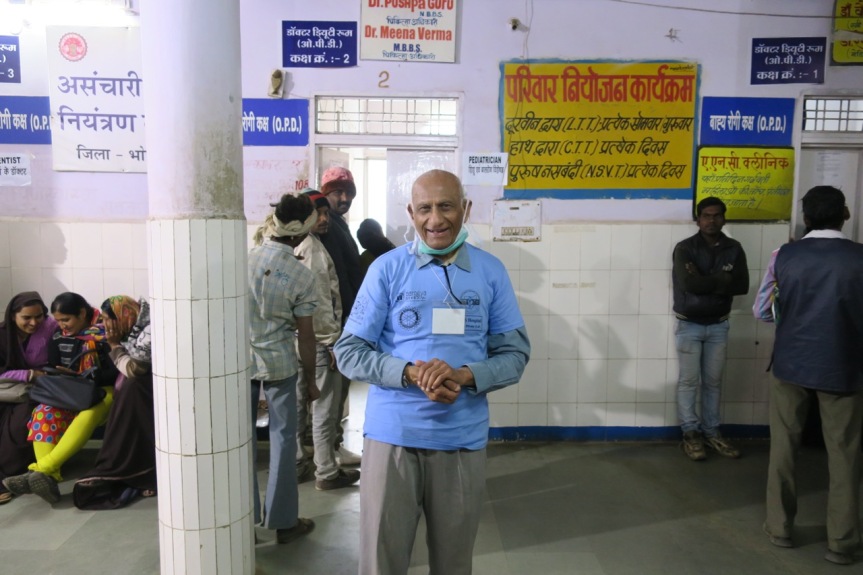
Last week I traveled to Bhopal, the tier-two capital city of Madhya Pradesh, a state in central India. I was there to participate in a health camp called Medical Yatra, which is an annual event to bring healthcare services to rural villages across the country. Each year, the Medical Yatra team convenes in a new city and spends ten days traveling out to neighboring villages. It’s a joint effort by an association of India physicians of Northern Ohio, local hospitals, the non-profit foundation Aarogya Seva, and the Rotary International club (http://www.aarogyaseva.org/medical-yatra-2017/).

IMG_3825.jpg
Aarogya Seva’s slogan is “Promoting Healthcare Volunteerism.” While I wasn’t planning on doing any volunteering on the Watson, I felt humbled to be included in the group and able to contribute in some way.

I heard about the camp because a company I interviewed for the project, MyCliniCare, was going to attend for a few days to bring their technology along with the medical supplies. MyCliniCare provides a telemedicine solution in the form of a suitcase for on-the-go healthcare. The suitcase, which can be brought to any rural area, has many small medical devices and monitors along with a laptop that synthesizes the collected data and connects to a trained doctor over a video call.
IMG_3728.jpg
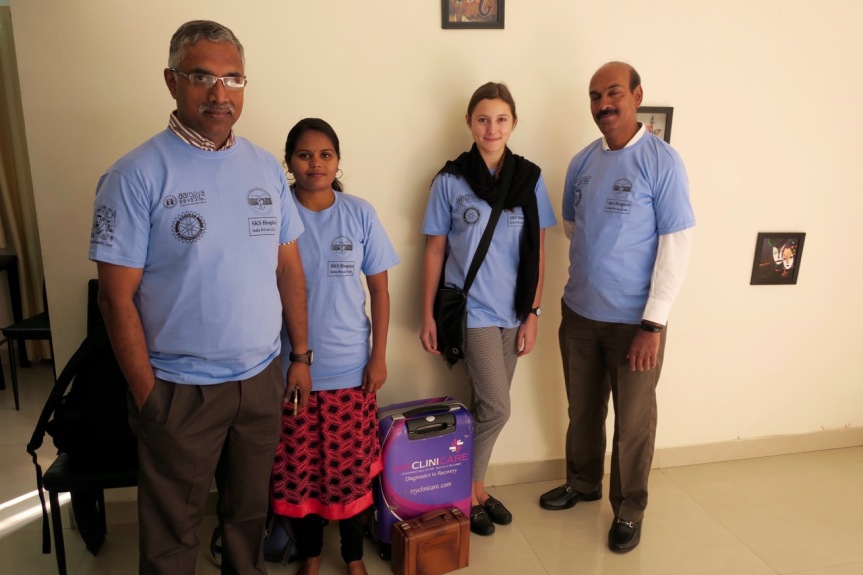
The MyCliniCare team and me in our volunteer t-shirts! The MyCliniCare suitcase is in the shot as well.
IMG_3743.jpg
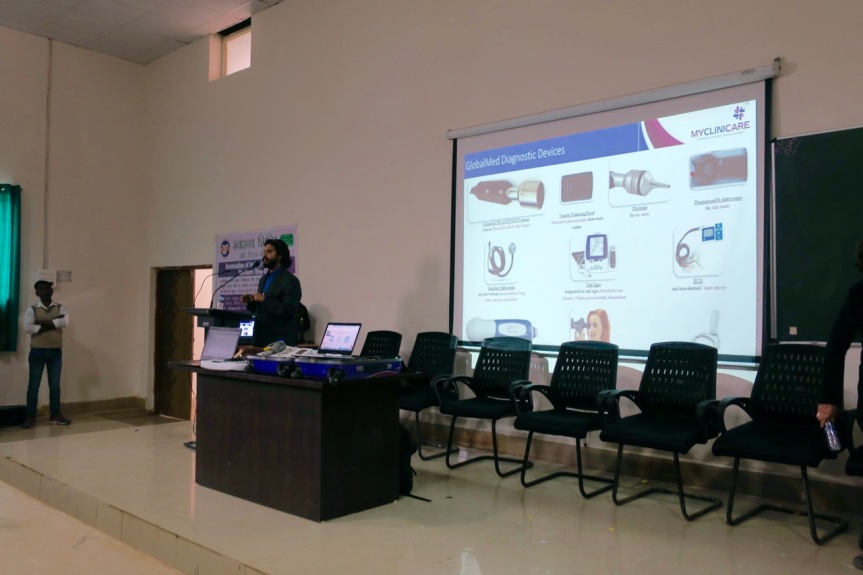
Dr. Dayaprasad, founder and director of the Aarogya Seva foundation, giving a presentation to medical students in Bhopal about the various medical diagnostic devices included in the MyCliniCare telemedicine kit.
IMG_3746.jpg
Here, Gururaja of MyCliniCare is demonstrating the telemedicine setup by pointing the multipurpose otoscope into his mouth. The resulting image of his throat is displayed on the projection screen, which is what a doctor would see remotely.

One new addition to MyCliniCare’s set is the iBreastExam device, a handheld sensor for breast tumor screening. Using piezoelectric sensors, the device checks for lumps in a patient’s breasts and delivers a result in 5-10 minutes; if it finds anything, a mammogram follow-up is required. In each village that we visited, the MyCliniCare team set up a private place for their technician to screen women with iBreastExam.

IMG_3839.jpg
The iBreastExam handheld device is pink and white, and it delivers real-time results to the connected app.
IMG_3832.jpg
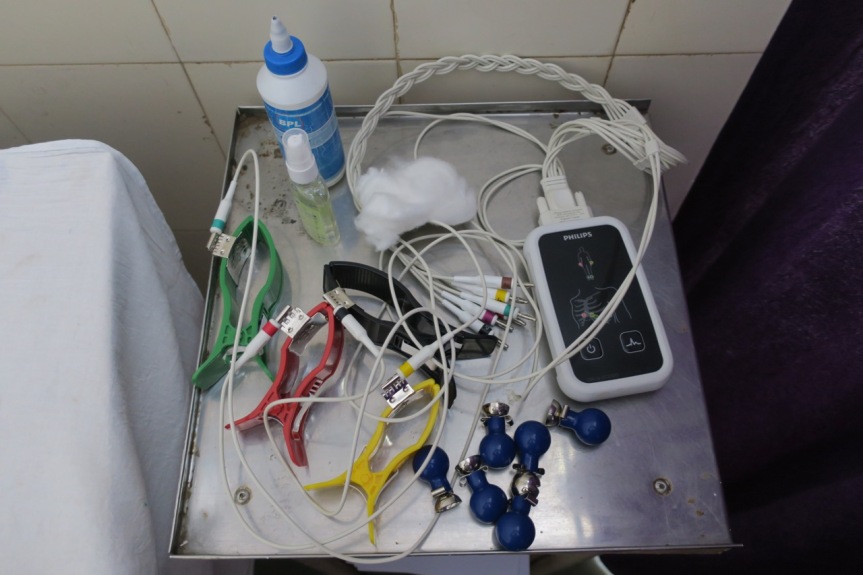
In the same room as the breast tumor screening, we performed ECGs with this portable device (which also sends its results to a smartphone app, connected via WiFi).

Though I initially intended to tag along with the MyCliniCare team and simply observe, I ended up becoming a full volunteer for a few days since the health camp needed the help. For the first two days, I teamed up with a doctor to run the blood-test station. The doctor spoke to the patients in Hindi and pricked their fingers to get blood, and I took the samples and ran the tests with the devices we had brought. We had a small hemoglobin device to test for anemia and a small glucometer to test for high blood sugar.

IMG_3782.jpg
The HemoCue hemoglobin meter that we used. Incidentally, it is made by a Swedish company!
IMG_3784.jpg
Medicines set up by the pediatricians in the same room as the blood testing.

After months of interviewing people about attitudes towards health and medical technology in rural India, it was invaluable to see those very attitudes in front of me. It felt like all of a sudden I had gone from using secondary sources for my information to primary sources. Most of the villagers were comfortable getting their blood drawn and tested, as it was a simple and quick procedure that was explained to them in Hindi. However, they rarely reacted to the results due to a general lack of awareness of how much blood sugar was too much and what that meant, as well as what the purpose of hemoglobin testing was.
A few of the villagers, especially the children, were scared to get their fingers pricked and found it quite painful (making very familiar cringing faces!). One woman in the village of Tumda sat down for a blood test, had her finger swabbed with alcohol, took one look at the little lancet that was about to pierce her fingertip, and started cursing in Hindi and nearly ran out the door. I was stunned that she hadn’t realized what a blood test entailed. Her reaction reminded me of a few interviews I’ve had here in which people have told me that many Indian patients, especially in rural areas, are resistant to invasive procedure from finger-pricking to surgery.
IMG_3815.jpg
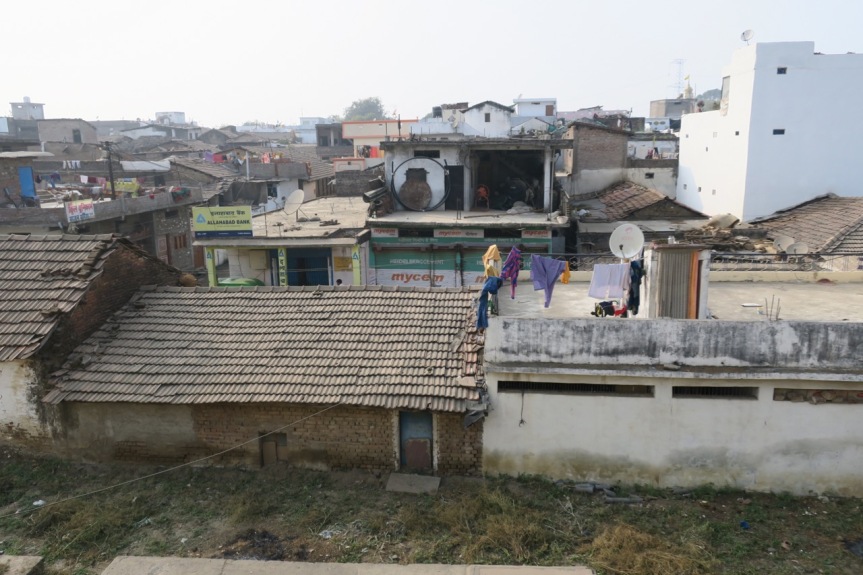
Tumda Village.
IMG_3823.jpg
As things quiet down in Tumda, the volunteers show each other how to read a classic blood pressure monitor.

As part of the camp, I traveled to the villages of Seoni, Tumda, and Berasia. I was happy that my fellow volunteers were mostly Indian; I wonder if the villagers were a bit put off by my presence (being an obvious foreigner), and it was challenging not knowing Hindi. So it was good to stay useful, and it was fascinating for me to be around so many doctors volunteering their services. Of course, the question of sustainability is always important: how do these one-off health camps help the villagers if we can’t come back to the village? The doctors I asked told me that some care is always better than no care, and the big problem is awareness – many villagers are not aware of their medical issues or how to address them. At least with a visit from specialists via this type of health camp, patients can get the right information and seek the appropriate care at a more accessible (and permanent) health center or hospital. The Medical Yatra team keeps track of all the patients that need to be referred to specific hospital departments, and they send those lists to the nearby hospitals, who then send vans to the villages to pick up the patients for free treatment at their facilities. Also, most patients do have a mobile number, so we can at least call to follow up.

IMG_3772.jpg
The school in Seoni where we set up camp.
IMG_3778.jpg
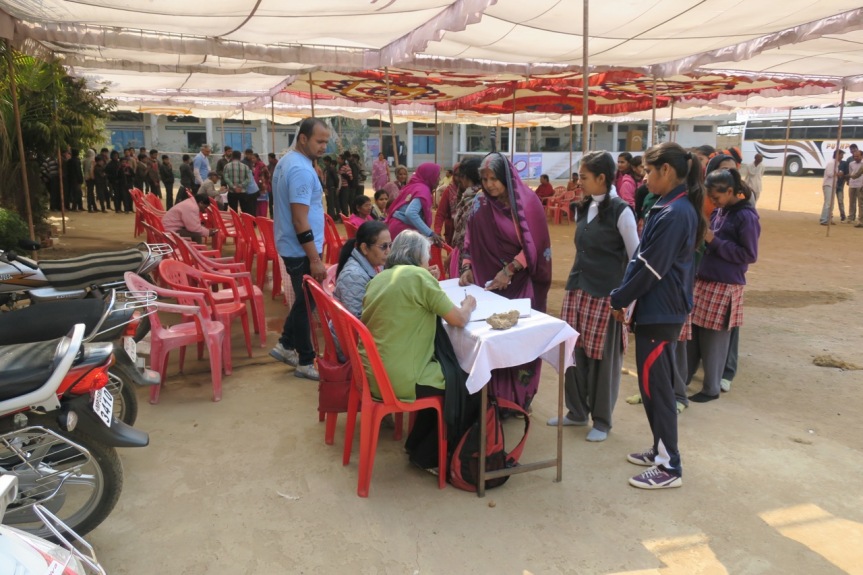
Medical Yatra volunteers registering patients for treatment.
IMG_3760.jpg
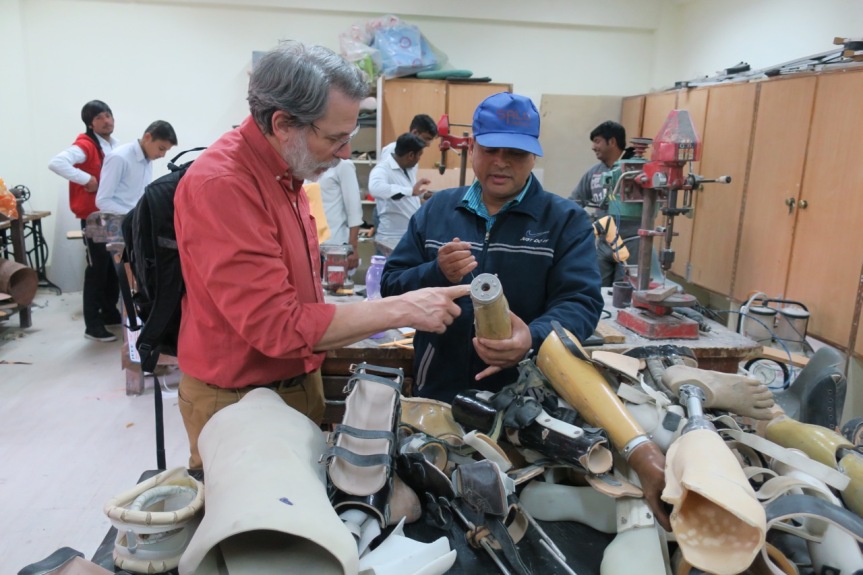
In Bhopal, we visited this government center making prosthetic limbs and offering rehabilitation techniques. Professor Schull, on the left, was interested in comparing their design to his 3D-printed prosthetic designs.
IMG_3790.jpg
One of Professor Schull’s 3D-printed prosthetic prototypes.
IMG_3840.jpg
The internal medicine room that we set up at Berasia village. The hallway just outside the room was packed wall-to-wall with patients all day.
IMG_3841.jpg
Dr. Ramesh Shah, a volunteer from Ohio.

I’m very grateful to MyCliniCare and the Aarogya Seva foundation for letting me join their effort for a few days. It was inspiring to meet so many hard-working doctors and actually operate the type of medical devices I’ve been thinking about throughout my project.

Monday, February 15, 2016

Sanitary Napkins and Feminine Hygiene


Seeing the sanitary napkins women empowerment project whilst as part of 2016 Medical Yatra made me want to look into this topic a bit more.


For someone from a developed country we do not think much with regards to this area of female hygiene nor do we generally have any issues with access to sanitary napkins or tampons. Yet many women around the world still use scraps of dirty cloths which they cannot clean or sanitise properly.  Alarmingly I read that up to 70% of all reproductive diseases in India are caused by poor menstrual hygiene.


For so many women around the world menstruation is still a taboo subject with many restrictions placed on the women particularly around isolation as they are considered unclean.  Yet I can see why the commercially available products are not used openly and freely as women especially in rural villages have trouble to access, afford and dispose of them properly.  Further to this there is still much lacking on education on menstruation and female hygiene.


Fortunately there are several different projects currently in place using different approaches to address this issue including the use of cloths and menstrual cups.


This is the first time I’ve come across menstrual cups like SheCup or Ruby Cup. Both use a medical grade silicon cup which is inserted in the vagina like a tampon. The benefits of these are that they are much cheaper and better for the environment than commercially available sanitary napkins.   


Another project/initiative is Goonj’s Not Just a Piece of Cloth (NJPC) which was established in 2005 and has expanded globally.  They use old/discarded cloth to create reusable sanitary napkins and use this as platform to engage and educate about female hygiene whilst also providing job opportunities.  


The basis of the project that I saw at the Gram Seva Trust Hospital is related to the work Arunachalam Muruganantham and his company Jayaashree Industries.  What is particularly inspiring about Arunachalam is that he did not finish high school and that what began as a way to impress his new bride has evolved to something so much more which included him testing sanitary pads himself with the use of animal blood. I highly recommend watching Arunachalam TED talk from 2012. A documentary called 'Menstrual Man' has been created about him and his work.


What I love about the project I saw is that it is run by women for the women giving them a much needed low cost solution and income. Furthermore the pads are biodegradable reducing our impact on the environment particularly given that waste disposal is another burden particularly in rural areas.


As with all things I believe that a variety of different solutions are needed to address this issue as there is never a one size fits all to any problem.


I’d like to leave you all with an amusing advertisement we have in Australia which shows the marked difference between the countries views on the topic. https://www.youtube.com/watch?v=rg2-ZzSBl5s

Links on that mentioned above can be found below.


Disclaimer: The opinions expressed within this article are the personal opinions of the author. The facts and opinions appearing in the article do not reflect the views of AarogyaSeva and AarogyaSeva does not assume any responsibility or liability for the same.


To get in touch with the author or to join our team write to us at – Volunteer@aarogyaseva.org


Sunday, February 7, 2016

2016 AIPNO Medical Yatra


As was previously noted, Aarogyaseva was again part of 2016 Medical Yatra in Gujarat which ran from 23rd January to 30th January in connection with the following organisations
  • Association of Indian Physicians of Northern Ohio (AIPNO)
  • Action Research in Community Health (ARCH)
  • Rotary Club of Dharampur 
  • Shabri Chhatralaya
  • Intal

It brought 37 both medical professionals and general volunteers from USA, UK, India and Australia in conjunction with local health workers, Rotarians and ARCH workers.  We had with us a mix of internal/family doctors, emergency physicians, paediatricians, obstetrics/gynaecologists, dentists and an orthopaedic surgeon.  Apart from seeing the patients we also conducted CPR and dental hygiene education sessions as well as have patients take part in blood pressure research.


AIPNO was founded in 1983 and is a non-profit membership organisation of physicians of Indian origin in Northern Ohio. It has membership of 300 physicians and have they organised Medical Yatras since 2001.  They have provided aid to Mexico, Haiti, Peru, Ecuador, Uganda, Kenya, Honduras, Dominican Republic, Burundi and India. What is amazing is that the volunteers who came were in the late 60s and 70s who were either semi retired or retired.  Visit their website http://www.aipno.org/ for more information

ARCH currently provides provides primary health care services to approximately 25,000 patients along with basic health education and preventative services such as vaccinations and prenatal care. In addition they provide movie health camps in surrounding villages.  More about them can be found here: http://www.archgujarat.org/ 

We were split into 2 groups each visiting 5 locations over 5 days seeing up to 1,000 patients daily and ~4,000 patients in total. (The exact numbers are still to be finalised.)  People came from nearby villages and waited patiently for several hours to be seen. At each spot we spent 4-8 hours depending on the number of patients that presented.   For some of us we stepped into unfamiliar roles of dental, paediatric, gynaecology or pharmacy assistants, whilst others had to recall prior knowledge to diagnose, prescribe and dispense medications.   All of us had to improvise with limited supplies and diagnostic tools whilst working in a team to provide the best possible outcome.

Each stop was unique with a different variety of diagnosis and facilities. On some days it took us only about 30 minutes to get there and on others over 90 minutes across dirt roads. The majority of time we were situated within the local school which meant the kids had a disruptive day and were free to interact with the group, be seen by paediatricians or dentists and/or attend educational sessions being run. Regardless of where we were, the locals were all very welcoming and patient. It was heartwarming to see some of the older children assist with translation, directing people and/or helping the older patients to where they needed to go. 


Undernutrition was massive problem with 14-16 year old teenagers looking like they were 9-10 years old. The adults on the other hand looked much older than they should be due to physical outdoor labour with in many cases extremely high blood sugars and blood pressures. 

Language was a massive issue with local tribal languages being spoken in many instances as opposed to Gujarati or Hindi which become a case requiring up to 3 interpreters sometimes depending on the translator and Doctor.   


Observations

  • all who came were strong, happy and didn’t complain about the wait or their lot in life with physical examinations easy due to the lack of fat (many of those in their 40s/50s had six pack abs!) 
  • Biggest issues were undernutrition, undiagnosed hypertension, diabetes, goitres, cataracts, dry skin and cavities 
  • Introduction of fluoride, reduced salt and sugar diets and iodised salt would greatly assist these communities as part of preventable health schemes  
  • Girls were particularly shy with all being curious particularly around the tall Americans, our smart phones and cameras 
Outcomes from 2016 Medical Yatra
  • Recommendations to reduce cavities and improve teeth health particularly in children to be provided to local government officials 
  • ARCH has committed to follow up patients seen including scheduling of 33 cataract surgeries 
  • A piece for AJ+ (on online news and current events channel by Al Jazeera Media Network AJMN) is being finalised.  


All of us came with open hearts, warm smiles, positive and flexible attitudes and a sense of humour but left with so much more.  We have much to learn from each other and language is not a barrier.


I would highly recommend going on Medical Yatra as it is so much more than volunteering with an amazing bunch of people and seeing the countryside and interacting with the locals in a unique way as it includes component of spirituality as we stayed at Shrimad Rajchandra Mission Dharampur and were even fortunate enough to have an audience with Baba Pujya Gurudevshri Rakeshbhai.  More about the Ashram and their work is here: http://www.shrimadrajchandramission.org/

More photos are available here: https://www.facebook.com/media/set/?set=a.1582019118687142.1073741860.1384301005125622&type=1&l=4335feceba 

Number of Doctors: 14 including 2 dentists
Total number of volunteers: 37
Number of patients seen: ~4000
Number of sites visited: 10 

Volunteer hours (based on average 6 hour day for 37 volunteers) : 1110 hours